
Access Work That Moves Septic Projects Forward
Excavation Services in Ulm for septic installations, repairs, drain field projects, and site preparation
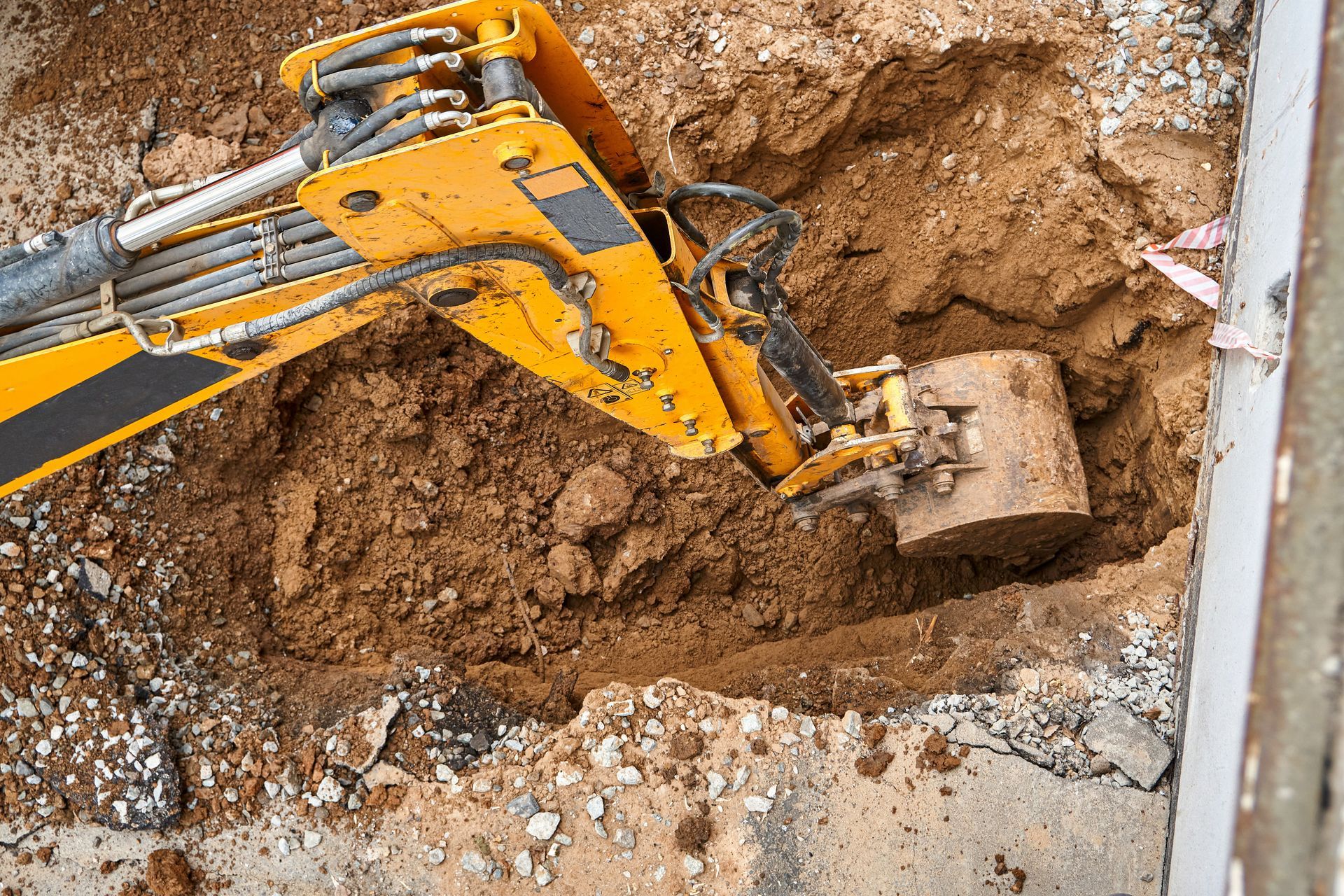
Septic system work often stalls when the contractor who identifies the problem cannot dig to access it, forcing property owners to coordinate between multiple companies while the system remains out of service. Flush Away Septic Service handles excavation in-house for septic installations, repairs, drain field projects, and site preparation work in Ulm, allowing more complete project management without handoffs or scheduling delays. Excavation capabilities include digging for tank access, removing failed drain field sections, grading for new installations, and exposing buried components that require replacement or inspection.
Excavation is required whenever septic work involves accessing buried tanks, replacing distribution boxes, installing new drain fields, or preparing a site for a new system. The depth and extent of digging depend on the specific project, but most residential septic tanks are buried three to five feet below grade, while drain field trenches extend across large sections of the property. Excavation also includes backfilling and grading after the work is completed to restore proper site drainage and prevent surface water from pooling near the system.
Schedule an on-site evaluation to assess excavation requirements for your septic project.
Why In-House Excavation Simplifies Septic Work
When excavation is handled by the same contractor managing the septic work, the project moves faster because there is no waiting for a separate excavation company to coordinate schedules. Digging proceeds based on what the septic evaluation reveals, with adjustments made in real time as components are exposed and conditions are confirmed. This approach reduces project timelines and eliminates communication gaps that often lead to rework or delays.
After excavation and septic work are completed, the site is backfilled with clean material, graded to promote drainage away from the system, and compacted to prevent settling that could damage new components. Flush Away Septic Service restores the work area to a condition that allows normal property use without leaving low spots or uneven surfaces that collect water. The excavation component of the project is finished when the site is stable and properly contoured.
In-house excavation also allows for faster response when repairs require immediate access. If a tank collapse or drain field failure occurs, digging can begin as soon as the problem is diagnosed rather than waiting days for an excavation crew to become available. This reduces the period during which the property's wastewater system is out of service.
Common Questions About Excavation for Septic Projects
Property owners planning septic installations or repairs often ask about the scope of excavation work and how it fits into the overall project timeline.
What types of septic projects require excavation?
Any project that involves accessing buried components requires digging. This includes tank installations, tank replacements, drain field installations, distribution box repairs, and system upgrades that involve relocating or expanding the drain field. Excavation is also necessary when performing diagnostic work on systems with buried access points.
How deep does excavation go for septic work in Ulm?
Tank excavation typically reaches three to five feet below grade, depending on frost depth requirements and the original installation depth. Drain field trenches are usually dug to depths between eighteen and thirty-six inches, with spacing determined by soil percolation rates and local code requirements.
What happens to the excavated soil?
Soil removed during excavation is either used as backfill material after the work is completed or hauled away if it is unsuitable for reuse. Clay-heavy soils or material contaminated with sewage is typically removed from the site, while clean soil is retained for grading and site restoration.
Why is it better to use a septic contractor with excavation capabilities?
Combining both services under one contractor reduces project delays, eliminates scheduling conflicts, and ensures that digging proceeds based on real-time findings during the septic work. It also simplifies accountability because one company is responsible for both the excavation and the system work.
How long does excavation take for a typical septic repair?
Most residential septic repairs requiring excavation are completed in one to three days, depending on the depth of the components, soil conditions, and weather. Larger projects such as full drain field replacements may take longer, especially if site grading or soil replacement is necessary.
Flush Away Septic Service provides excavation support as part of septic installations, repairs, and drain field projects, allowing property owners in Ulm to move forward with complete project management under one contractor. Call the office to request excavation service for your septic-related project and discuss site-specific requirements.